
I have a 13-year-old daughter. She does not have a TikTok account. She does not have Instagram. That has been a deliberate decision, one I've held firm on despite the persistent ask that every parent of a teenager knows well.
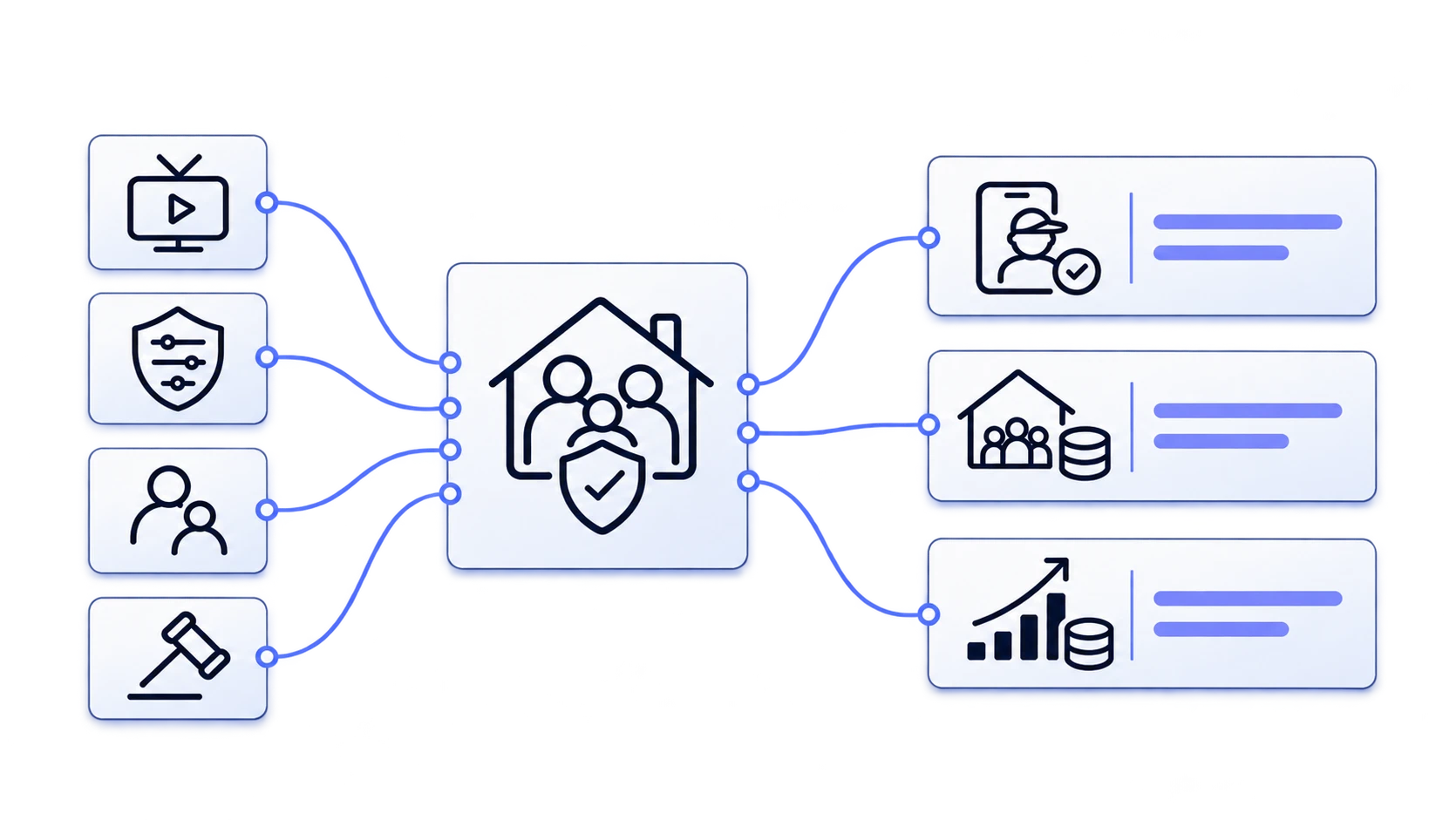
About a month ago I started seeing the ads. TikTok. Instagram. Warm lighting, a parent, and a teenager, reassuring voiceover. Screen time controls. Family Center. Content filters designed with your child in mind. I saw them on my television, in my living room, during the kind of programming parents watch after their kids go to bed.
My first read was surface level. Litigation defense. Senate hearings, state AG lawsuits, regulatory pressure, platforms signaling good intent to the institutions coming after them. I filed it and moved on.
Then I kept seeing the ads. And my daughter kept asking.
At some point I noticed something uncomfortable: my position was softening. Not because the product had changed. Not because I had new information about safety. Because the ads had done what ads are designed to do, they reframed the decision. The question was no longer whether social media was appropriate for a 13-year-old. It had quietly become whether I was the kind of parent who trusted the new tools available to manage it.
I caught myself mid-shift. I didn't see the architecture of the funnel at first. I just saw a way to stop the persistent ask and feel like a responsible parent while doing it. Hand to God, I was leaning toward a yes before I even realized I was being marketed to. Then I did what I do for a living. I looked at the environment. I realized I wasn't seeing these ads on my phone while scrolling, or even while streaming on my mobile device. I was only seeing them on the big screen, the connected TV in my living room, during the hours when parents are finally sitting down.
What I found was not a safety campaign with a secondary PR benefit. It was a lifecycle acquisition strategy, one that used me, the resistant parent, as the primary conversion target. Whether it was engineered that way from the start or emerged from the convergence of regulatory response and growth optimization, the mechanics are the same. The effect on the business is the same. And the fact that it almost worked on someone who does this professionally is the most important data point in the piece.
The PR defense reading is correct. It's just not the complete one. Here's what's underneath it.
Stage 1: Brand Rehabilitation
The surface function of these campaigns is litigation inoculation. When a company faces active regulatory and legal scrutiny, visible remediation effort matters, to juries, to regulators, to legislators deciding whether to act. The ad spend itself signals good faith. This is documented corporate playbook, and it works regardless of whether the underlying product actually changes.
But brand rehabilitation is only stage one because it resolves a problem that already exists. The more interesting question is what these platforms appear to be building toward, deliberately or not.
Stage 2: Gatekeeper Conversion
The creative points toward a specific target audience. These ads are not running in teen content environments. They're running on connected television, the living room screen, the appointment-viewing device for parents 35 and older. The tone, the scenarios, the language of parental supervision and shared controls, none of it is speaking to a 13-year-old. It is speaking to the person who told a 13-year-old no.
The targeting reinforces that read. CTV audiences can be purchased against household composition data from third-party providers. Parents of preteens and early adolescents are a defined, purchasable segment. Whether by design or by the logic of growth optimization, the parent of a 13-year-old is the highest conversion gatekeeper available, a child old enough for the platform to want, young enough that parental permission remains the barrier.
The mechanism is an identity shift. The parent who said no is a blocker. The parent who says yes with conditions becomes a supervisor. That reframe, from opposition to managed participation, is the conversion event. The platform does not need to win the argument about safety. It only needs to give the parent a version of yes, they can feel good about.
Stage 3: The Data Event Nobody's Talking About
When a parent links their account to their teens through a Family Center feature, something happens that has nothing to do with content filters. The platform achieves household identity resolution.
It now knows who the parent is, their age, their purchase history, their relationship to the new user, and their position within a multi-generational social graph. This is voluntary, first-party data submitted by the highest-value demographic on the platform, in exchange for the feeling of supervision. The parent believes they are gaining control. From a data standpoint, they are expanding the platform's targeting surface.
For advertisers selling college funds, family insurance, home financing, or family travel, this household graph is worth more than the teen's account alone. The safety feature is also a data acquisition event.
Stage 4: Supervised Onboarding
The restricted account is now active. And here is where the strategy, designed or emergent, separates itself from conventional acquisition thinking.
Whether parental controls are fully effective is, from a lifecycle standpoint, beside the point. Even a fully functioning restricted account is still an account. It still generates sessions, impressions, and behavioral data. More importantly, it generates habit.
What the controls typically do not restrict is the algorithm. Content categories may be filtered. Time limits may apply. But the underlying intermittent variable reward structure, the mechanism that behavioral researchers have compared to a slot machine, and that features prominently in the litigation record against these platforms, continues to operate. The teen's pattern of engagement is being shaped by the platform's specific UI and reward architecture during the restriction period, not after it.
The restriction period removes the guilt, for the parent, who consented with conditions, and for the teen, who is using an approved platform. Frequency builds without the friction that typically accompanies a behavior the household has flagged as problematic. By the time restrictions are naturally outgrown, the app is already load-bearing in the user's social life. The platform is not a new choice at 18. It is the existing default, with the training wheels removed.
Stage 5: Cohort Inheritance
At 18, the restricted account becomes a fully monetizable adult account. Ad targeting expands. The user arrives with years of established usage patterns, an existing social graph, and no memory of consciously choosing the platform as an adult decision. The habit preceded the autonomy.
The marginal cost of acquiring that adult user, at the moment of full monetization is near zero. But that framing needs precision: the cost was not eliminated. It was deferred and bundled into earlier spend, the brand rehabilitation campaign, the product development of the control features, the CTV media buy targeting parents. What the platform avoided is the full marginal CAC it would have paid to acquire that same adult user cold, years later, through conventional channels. At scale, across an entire age cohort, that avoided spend is significant.
This is cohort inheritance. Platforms are not acquiring individual users. They are acquiring age brackets — population segments that age into full monetization on a predictable timeline, with retention rates that paid acquisition alone cannot replicate.
The Framework That Transfers
The TikTok and Instagram observation is the entry point. The transferable insight is this: if someone stands between you and your user, and you're not explicitly converting that person, you're running an incomplete acquisition strategy.
Most companies ignore that layer entirely. They optimize the funnel from awareness to conversion while the actual barrier, the gatekeeper, sits one step upstream, unaddressed. The result is overpaying to brute-force the end user when the more efficient move was always one step earlier.
In financial services this plays out at the consumer level every day. A new brokerage doesn't lose a prospect because the platform wasn't good enough. It loses because the spouse wasn't sold. Because the existing advisor relationship created enough inertia to delay the decision indefinitely. Because opening a joint account requires alignment between two people and only one of them saw the ad. These are gatekeepers, household-level decision makers, trusted relationships, switching costs that feel personal rather than financial. Most acquisition strategies treat the individual as the unit of conversion and ignore everyone else in the room. The ad reaches one person. The decision belongs to two.
Healthcare has known this longer than most categories, even if it hasn't always acted on it. Research consistently shows that women are the primary healthcare decision makers in the household for their children, for their partners, and often for aging parents. They are scheduling the appointments, evaluating the providers, and determining which insurance plan the family uses. A hospital system or health plan that markets exclusively to the patient is often marketing to the wrong person. The gatekeeper is making the call from the other side of the room and in most cases, she has been the whole time.
Automotive figured this out decades ago, not by choice but by data. Dealerships kept losing sales they thought were closed because the partner at home hadn't been part of the conversation. The industry eventually rebuilt its sales process around the household decision, not the individual in the showroom. Education faces the same dynamic, a university can win over a student completely and still lose the enrollment because the parent controlling the tuition conversation was never addressed. Enterprise software closes with procurement, not the end user who requested the tool, which is why the best sales teams spend as much time mapping the buying committee as they do demoing the product.
The companies that figure this out stop treating gatekeeper conversion as a PR problem or a regulatory cost and start treating it as the first stage of acquisition. The ones that don't keep wondering why their CAC is high and their retention is soft.
The question worth asking about your own acquisition strategy is not who your customer is. It's who controls access to them.
We should treat these safety campaigns as a masterclass in frictionless acquisition. It's a reminder that in the attention economy, trust is not the end goal, trust is the lubricant for the funnel. The platforms aren't asking for your permission to exist. They are asking for your permission to help you raise your child. And that is a much more lucrative ask.
I mentioned to Mia that I was writing an article about those ads, the ones from TikTok and Instagram about parental controls and family safety features. She said oh yeah, I've seen those. Then, without missing a beat: "Can I get Instagram?"
The platforms couldn't have scripted it better.